'%3e%3cpath%20d='M706.453%20375.999C860.234%20375.999%20984.899%20291.829%20984.899%20188C984.899%2084.1703%20860.234%200%20706.453%200C552.671%200%20428.006%2084.1703%20428.006%20188C428.006%20291.829%20552.671%20375.999%20706.453%20375.999Z'%20fill='%23009B4F'/%3e%3cpath%20d='M278.447%20375.999C432.229%20375.999%20556.893%20291.829%20556.893%20188C556.893%2084.1703%20432.229%200%20278.447%200C124.665%200%200%2084.1703%200%20188C0%20291.829%20124.665%20375.999%20278.447%20375.999Z'%20fill='%23009B4F'/%3e%3cpath%20d='M141.484%20166.68C125.01%20162.158%20114.996%20158.927%20114.996%20150.529C114.996%20143.422%20122.102%20138.9%20133.085%20138.9C144.068%20138.9%20155.051%20143.099%20164.095%20150.529L164.418%20150.852L165.388%20129.855C156.666%20125.01%20147.944%20121.78%20133.731%20121.78C123.394%20121.78%20114.027%20124.364%20107.243%20129.209C99.8137%20134.378%2095.9374%20142.13%2095.9374%20151.175C95.9374%20168.941%20110.796%20176.694%20123.394%20179.924C140.192%20184.446%20151.821%20188.323%20151.821%20198.659C151.821%20207.381%20144.068%20212.872%20131.47%20212.872C118.872%20212.872%20106.274%20207.381%2096.5834%20198.013L96.2604%20197.69L94.3223%20219.979C104.336%20226.762%20116.934%20230.316%20130.501%20230.316C142.13%20230.316%20152.144%20227.408%20159.25%20221.917C167.003%20216.103%20171.202%20207.704%20171.202%20197.367C171.202%20181.862%20161.511%20171.848%20141.484%20166.68Z'%20fill='white'/%3e%3cpath%20d='M264.557%20188C264.557%20215.78%20246.467%20230.316%20225.471%20230.316C215.457%20230.316%20207.381%20226.762%20201.244%20221.271V253.896H182.186V146.976H201.244V156.02C207.704%20149.883%20216.103%20145.684%20226.763%20145.684C247.436%20145.36%20264.557%20160.22%20264.557%20188ZM245.498%20188C245.498%20172.494%20236.131%20162.158%20222.887%20162.158C214.811%20162.158%20207.058%20165.711%20201.567%20173.787V203.182C207.058%20210.288%20214.488%20213.841%20222.887%20213.841C236.131%20213.841%20245.498%20203.505%20245.498%20188Z'%20fill='white'/%3e%3cpath%20d='M352.095%20194.137H294.274C296.535%20207.058%20305.903%20213.841%20318.824%20213.841C329.807%20213.841%20337.882%20211.257%20346.604%20206.089L347.573%20222.886C339.82%20227.085%20330.13%20230.316%20317.532%20230.316C294.274%20230.316%20274.893%20215.78%20274.893%20188.323C274.893%20162.804%20294.274%20145.683%20317.209%20145.683C341.112%20145.683%20353.71%20160.22%20353.71%20181.216C353.71%20185.415%20353.064%20189.615%20352.095%20194.137ZM335.621%20178.632C335.621%20168.618%20329.161%20160.866%20317.532%20160.866C306.549%20160.866%20296.858%20168.295%20294.597%20180.893H335.298C335.621%20180.247%20335.621%20179.601%20335.621%20178.632Z'%20fill='white'/%3e%3cpath%20d='M443.189%20221.917L445.128%20203.505C452.88%20209.965%20463.54%20213.841%20474.846%20213.841C482.921%20213.841%20488.413%20210.611%20488.413%20204.797C488.413%20189.615%20444.482%20197.367%20444.482%20169.91C444.482%20153.436%20458.695%20145.36%20475.492%20145.36C487.444%20145.36%20496.488%20148.268%20503.272%20152.467L502.303%20169.587C494.227%20164.096%20484.213%20161.189%20475.492%20161.189C468.708%20161.189%20463.217%20163.773%20463.217%20168.941C463.217%20181.862%20507.471%20175.402%20507.471%20203.828C507.471%20221.271%20492.289%20229.993%20474.523%20229.993C461.602%20230.316%20450.942%20227.085%20443.189%20221.917Z'%20fill='white'/%3e%3cpath%20d='M590.488%20177.986V228.701H571.429V220.302C564.969%20226.439%20556.57%20229.993%20546.88%20229.993C528.467%20229.993%20517.484%20219.01%20517.484%20203.505C517.484%20187.03%20530.405%20177.017%20549.464%20177.017C556.57%20177.017%20563.677%20178.309%20571.752%20180.57V177.986C571.752%20165.388%20562.385%20159.897%20550.756%20159.897C542.034%20159.897%20532.02%20163.127%20524.914%20168.941L524.268%20152.467C530.405%20148.268%20541.711%20145.037%20554.309%20145.037C574.983%20145.36%20590.488%20155.374%20590.488%20177.986ZM571.429%20206.735V194.46C564.646%20192.199%20558.185%20190.907%20551.402%20190.907C541.711%20190.907%20535.574%20196.075%20535.574%20203.505C535.574%20210.934%20542.034%20215.78%20550.433%20215.78C558.508%20215.78%20564.969%20212.872%20571.429%20206.735Z'%20fill='white'/%3e%3cpath%20d='M592.104%20146.976H612.777L636.358%20198.659L659.616%20146.976H680.289L641.526%20228.701H630.866L592.104%20146.976Z'%20fill='white'/%3e%3cpath%20d='M754.907%20194.137H697.409C699.67%20207.058%20709.038%20213.841%20721.959%20213.841C732.941%20213.841%20741.017%20211.257%20749.739%20206.089L750.708%20222.886C742.955%20227.085%20733.264%20230.316%20720.667%20230.316C697.409%20230.316%20678.027%20215.78%20678.027%20188.323C678.027%20162.804%20697.409%20145.683%20720.343%20145.683C744.247%20145.683%20756.845%20160.22%20756.845%20181.216C756.522%20185.415%20756.199%20189.615%20754.907%20194.137ZM738.756%20178.632C738.756%20168.618%20732.295%20160.866%20720.667%20160.866C709.684%20160.866%20699.993%20168.295%20697.732%20180.893H738.433C738.433%20180.247%20738.756%20179.601%20738.756%20178.632Z'%20fill='white'/%3e%3cpath%20d='M826.618%20148.914L824.034%20166.357C819.511%20163.773%20814.989%20163.127%20810.467%20163.127C802.068%20163.127%20794.315%20167.326%20788.824%20176.371V228.701H769.766V146.976H788.824V157.958C794.315%20150.529%20802.068%20145.36%20812.728%20145.36C817.896%20145.36%20822.418%20146.653%20826.618%20148.914Z'%20fill='white'/%3e%3cpath%20d='M832.109%20221.917L834.048%20203.505C841.8%20209.965%20852.46%20213.841%20863.766%20213.841C871.841%20213.841%20877.333%20210.611%20877.333%20204.797C877.333%20189.615%20833.401%20197.367%20833.401%20169.91C833.401%20153.436%20847.615%20145.36%20864.412%20145.36C876.364%20145.36%20885.408%20148.268%20892.192%20152.467L891.223%20169.587C883.147%20164.096%20873.133%20161.189%20864.412%20161.189C857.628%20161.189%20852.137%20163.773%20852.137%20168.941C852.137%20181.862%20896.391%20175.402%20896.391%20203.828C896.391%20221.271%20881.209%20229.993%20863.443%20229.993C850.522%20230.316%20839.862%20227.085%20832.109%20221.917Z'%20fill='white'/%3e%3cpath%20d='M429.298%20206.412C422.838%20211.257%20416.054%20213.841%20408.302%20213.841C395.058%20213.841%20383.429%20204.474%20383.429%20188C383.429%20171.525%20395.058%20162.158%20408.302%20162.158C416.054%20162.158%20422.838%20164.742%20429.298%20169.264C430.268%20163.45%20431.237%20157.958%20432.852%20152.467C426.068%20148.591%20417.67%20145.683%20406.041%20145.683C382.783%20145.683%20363.725%20161.512%20363.725%20188C363.725%20214.487%20382.783%20230.316%20406.041%20230.316C417.67%20230.316%20426.068%20227.085%20432.852%20222.886C431.237%20217.395%20429.944%20211.903%20429.298%20206.412Z'%20fill='white'/%3e%3c/g%3e%3cdefs%3e%3cclipPath%20id='clip0_1478_9029'%3e%3crect%20width='984.9'%20height='375.999'%20fill='white'/%3e%3c/clipPath%3e%3c/defs%3e%3c/svg%3e)

Getting used to your new glasses
If you’re new to glasses, or have a new prescription, it can take time getting used to them. Below are helpful answers to common queries.
If you can't find the answer to your query below and you're still not having luck adjusting to your new glasses, pop in to see the team at any Specsavers store, we’re here to help. Find a Specsavers store near me.
FAQs for new glasses wearers
For most people, it can take few days to get completely used to a new prescription, but this can vary depending on whether you’re brand new to glasses or how much your prescription has changed for existing glasses‑wearers.
The good news is there are several tried and tested tips that can help you get adjusted:
Put your glasses on when you start your day – a sudden change later in the day can feel more disorientating. It also helps to start forming habits
If you wear multifocals or bifocals, try turning your head rather than just your eyes
The longer you wear your glasses, the quicker your eye muscles can adjust.
Try to wear your new glasses all the time without going back to your old pair. Wear them as you have been advised and allow a few days for your eyes to adapt.
If your vision feels a little strange at first, try wearing them in the morning rather than swapping from your old to new glasses during the day. It’s best to try and wear your new glasses as your optometrist has advised and avoid going back to your old glasses.
It might take a bit longer to adjust to new glasses when the astigmatism element of your lenses has changed. This will depend on what has changed in your prescription, but in general, the larger the change, the longer it may take to get used to. This can take a few days or a couple of weeks if you’re brand new to glasses. If both the strength of your prescription and the astigmatism changes, this may give you more symptoms when you first put on new specs.
Typical symptoms with new astigmatism glasses include:
Feeling like your vision is sloping or distorted
Feeling like your vision is ‘swimmy’ when you move your head around
Your store team will advise you on how to adjust to new glasses, but here are some general tips that can help:
Start by putting on your glasses as soon as you start your day. This will help you to form a habit of wearing them early on. If you put them on later on in the day you may find the sudden change more disorientating.
Wear glasses indoors to start with. Walking around the house is a great way to familiarise your eyes to new glasses, and eye movement actually helps you to adjust to a new prescription quicker than sitting still. However, if you find this too disorientating, sitting down and doing something like watching TV can be helpful.
Try not to revert back to old glasses.
Remember our team in store are always here to help, so pop by if you have any queries.
We’d recommend using our cloth and cleaning spray to clean your glasses. If they're particularly dirty, pop into any Specsavers store and the team can give them a clean for you.
You can store your glasses in the case we gave you when you collected them. If you need a new case, pop into your local Specsavers and the team can help you out.
If you have any problems with your specs, you can always bring them into your local store where we can adjust them or tighten the screws if required.
All of our lenses come with a scratch‑resistant treatment as standard. Otherwise, make sure you keep your glasses in their case, when they’re not on your face, put them in your case.
No – glasses should make your eyes feel more relaxed and comfortable once you’re used to wearing them, as well as improving the overall clarity of vision.
Sometimes people say they feel their eyesight has deteriorated when they take their glasses off. This can be because while wearing glasses the eyes and brain adjust to sharp vision. When glasses are removed the brain then realises what you’re missing and perceives blur. Wearing glasses more frequently could help to alleviate this problem.
Getting used to your new multifocals
Thanks to the detailed measurements we take, most people adjust quickly but others may experience slight dizziness at first when moving quickly from one viewing area to the next.
Your eyes and brain will quickly work out which part of the multifocal lens you need to look through for optimum vision, and initially this will mean learning to move your head about a little more, rather than solely relying on moving your eyes around.
Most first‑time multifocal wearers really enjoy the full range of vision they get, from distance to near, without having to change or take off glasses, and once adjusted to the new frames they often forget they’re wearing them.
Your brain needs some time to get used to the new viewing areas of your multifocals, especially if you’re trying them for the first time. This can take a few days.
Compared to multifocal designs from 10 or 20 years ago, modern multifocal lenses have more comfortable and user‑friendly transition zones between the different strengths. So, most people find they can adapt quite easily and quickly to wearing multifocals.
Even though it might feel strange, it’s best to keep wearing your glasses so that your eyes can gradually adjust.
Some people may experience headaches and dizziness (usually mild) when they’re getting used to new multifocals. This is common if you have a history of being sensitive to changes in your vision or taking more time to adjust to new glasses in the past.
These symptoms will naturally subside the more you wear your multifocals, but if they persist and are consistent with wearing the new glasses, please pop by to see our team in‑store when you’re nearby. It may be that the frame needs to be tweaked to reduce this effect.
The magnified element of a multifocal is found at the bottom and helps with reading and close‑up work. This can mean that as well as magnifying near print, you also notice that other objects appear magnified when you glance down. This is something to keep in mind when you first wear multifocals, particularly when you’re going down stairs or judging where kerbs or steps are.
Remember to move your whole head downwards a little more, towards your chin, so you’re looking more towards the top of the multifocal lens when getting used to judging distances and working out where kerbs and steps are. But once you get familiar with the multifocals this will become much more natural.
New Glasses & Headaches
While glasses will benefit you in the long run, it’s very common to experience headaches with new glasses. It may take a few days to get used to your new glasses but, if you’re experiencing headaches, please contact your local store and they can help you out.
Often people get headaches when they need glasses, as their eyes are straining to try to get clear vision. Glasses will certainly help with this, but in the meantime, your eyes need to catch up – this is when you might experience headaches with your new glasses.
Wearing glasses changes the way your eye muscles are used to working. Even though it will improve your vision, it just takes a bit of time for the muscles in your eyes to adapt from their usual habits. Headaches happen because these muscles are working against the change in vision, causing eye strain and associated head pain.
The good news is that once your muscles are used to the change, your headaches should disappear.
Other reasons for glasses headaches?
The fit and feel of new frames can makes all the difference in terms of comfort. Our team in store take detailed measurements of your face and head to make sure your glasses feel as comfortable as possible – but sometimes it can still feel uncomfortable while you’re getting used to them.
Often, just the sensation of having something on your face can feel odd to start with. The new feeling of pressure on your ears and nose might be all it is – but if it’s ever bothering you, come back and see us. We might be able to make some adjustments to your frames to make you feel more comfortable.
If you’re using your glasses for something they’re not intended for you may find it harder to see. For example, if you use your reading glasses to watch the TV or use the computer. If you’re unsure on the best way to use or glasses, please speak to one of our team members in‑store who can help you out.
Your eyes generally need to work harder when using screens. Spending lots of time on our smartphones, laptops or tablets mean our eyes need to work hard to take in the moving images, glare and flickering from screens.
Particularly if you work at a computer all day, computer eye strain is very common and can lead to headaches.
Digital eye strain is also a common symptom when you get new glasses. This is because the distance we view digital screens is often in‑between our vision zones – in short, it’s just a different type of thing that our eyes need to adjust to.
Kids glasses care
Your new glasses look great! Let's talk about what to expect when getting used to them.
Like all new things, your glasses can take some time to get used to. Never fear, here are some helpful tips on what to expect as well as answers to some other questions you may have.

Caring for your glasses
When putting them down, make sure the lenses are facing the sky...otherwise they could get scratched
Spray lenses with lens spray on both sides and use the cloth from your case to clean them
Put them on and take them off with both hands
Visit your local Specsavers store regularly to have your frames tightened, cleaned and the fit checked, as they can loosen with use over time.
Wiping your lenses with things like a t‑shirt or towel can cause them to scratch ‑ use the cloth from your case instead
Your case is very important to keep your glasses safe when you are not wearing them. If you need a new one, let your caregivers know so they can ask your local Specsavers store to help you out.
We include a special treatment when making your lenses to help reduce the chance of them scratching. But you still need to make sure you keep them safe. When putting them down, make sure the lenses are facing the sky and you're using your spray and lens cloth to clean them.
Your case is very important to keep your glasses safe when you are not wearing them. If they're not on your face, pop them in the case.
New glasses & headaches
Your new glasses were made specially for you, to help you see better, though some headaches in the first few days can be common.
Before your new glasses came along, your eyes had to do all the hard work on their own, which often made them feel tired.
Most of the time, when your eyes realise they don't have to work so hard on their own now your glasses are there to help them, they will relax and any headaches and eye strain will stop.
If you are having headaches when wearing your glasses, please let your caregiver know so they can contact your local store & help you out.
Issues with glasses
Even though our in‑store experts have taken time to make your glasses just right for you, having something new on your face can take some time to get used to.
We get it, you might never have had the hug of a frame on your nose or ears before and that is ok! But please know that you can always come back to see us if they need a little more help to feel 'just right'.
Not all glasses are designed to be worn all of the time. Some are made to support task‑specific activities like in the classroom, or on computers only. Your Optometrist will walk you through how to use them and what to expect when you get your new glasses, especially if they are not for full‑time wear.
If you have any questions on when to wear your new glasses, please reach out to your local store, as using glasses for the wrong activities can feel uncomfortable, make it harder to see, or cause headaches.
We use technology more and more, and your eyes generally need to work harder when using screens or when doing up close‑work for a long time. It also means extra focusing effort, which reduces how often we blink ‑ this can dry out the eyes, especially when adjusting to new glasses, and can lead to tired‑eyes and headaches.
Task‑specific glasses and lens treatments might be suggested by your Optometrist and Specsavers team, to help with this.
You can also try;
Taking regular breaks
Try the 20‑20‑20 rule, which is to look away from the screen every 20 minutes, for 20 seconds, at something 20 feet (6 metres) away. This will allow your eye muscles to relax.
Set your screen up to just below eye level and about an arm’s length away to help reduce digital fatigue.
Spending time outdoors reduces the risk of developing short‑sightedness.
Find out more
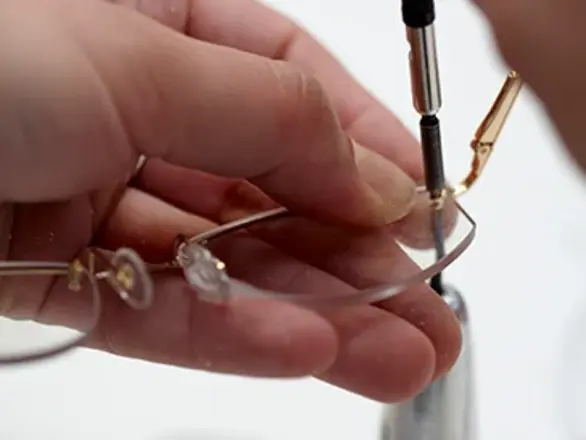
Repairs & Adjustments
If you find that your glasses aren’t quite fitting or are in need of some repairs, we have a few tips on what you can do at home.
See our tips
Wear & Care
Helpful hints and tips for looking after your glasses and getting the most out of them over their lifetime.
Read tips.
Glasses Buyer's Guide
Need help choosing lenses, complementing your face shape or understanding prices? You’ll find our complete guide to buying glasses here.
More glasses guides.
Kids' eyecare
Regular kids’ eye tests by qualified optometrists help detect vision issues like myopia and lazy eye early, supporting development with tailored treatments.
Learn about kids' eyecare