'%3e%3cpath%20d='M706.453%20375.999C860.234%20375.999%20984.899%20291.829%20984.899%20188C984.899%2084.1703%20860.234%200%20706.453%200C552.671%200%20428.006%2084.1703%20428.006%20188C428.006%20291.829%20552.671%20375.999%20706.453%20375.999Z'%20fill='%23009B4F'/%3e%3cpath%20d='M278.447%20375.999C432.229%20375.999%20556.893%20291.829%20556.893%20188C556.893%2084.1703%20432.229%200%20278.447%200C124.665%200%200%2084.1703%200%20188C0%20291.829%20124.665%20375.999%20278.447%20375.999Z'%20fill='%23009B4F'/%3e%3cpath%20d='M141.484%20166.68C125.01%20162.158%20114.996%20158.927%20114.996%20150.529C114.996%20143.422%20122.102%20138.9%20133.085%20138.9C144.068%20138.9%20155.051%20143.099%20164.095%20150.529L164.418%20150.852L165.388%20129.855C156.666%20125.01%20147.944%20121.78%20133.731%20121.78C123.394%20121.78%20114.027%20124.364%20107.243%20129.209C99.8137%20134.378%2095.9374%20142.13%2095.9374%20151.175C95.9374%20168.941%20110.796%20176.694%20123.394%20179.924C140.192%20184.446%20151.821%20188.323%20151.821%20198.659C151.821%20207.381%20144.068%20212.872%20131.47%20212.872C118.872%20212.872%20106.274%20207.381%2096.5834%20198.013L96.2604%20197.69L94.3223%20219.979C104.336%20226.762%20116.934%20230.316%20130.501%20230.316C142.13%20230.316%20152.144%20227.408%20159.25%20221.917C167.003%20216.103%20171.202%20207.704%20171.202%20197.367C171.202%20181.862%20161.511%20171.848%20141.484%20166.68Z'%20fill='white'/%3e%3cpath%20d='M264.557%20188C264.557%20215.78%20246.467%20230.316%20225.471%20230.316C215.457%20230.316%20207.381%20226.762%20201.244%20221.271V253.896H182.186V146.976H201.244V156.02C207.704%20149.883%20216.103%20145.684%20226.763%20145.684C247.436%20145.36%20264.557%20160.22%20264.557%20188ZM245.498%20188C245.498%20172.494%20236.131%20162.158%20222.887%20162.158C214.811%20162.158%20207.058%20165.711%20201.567%20173.787V203.182C207.058%20210.288%20214.488%20213.841%20222.887%20213.841C236.131%20213.841%20245.498%20203.505%20245.498%20188Z'%20fill='white'/%3e%3cpath%20d='M352.095%20194.137H294.274C296.535%20207.058%20305.903%20213.841%20318.824%20213.841C329.807%20213.841%20337.882%20211.257%20346.604%20206.089L347.573%20222.886C339.82%20227.085%20330.13%20230.316%20317.532%20230.316C294.274%20230.316%20274.893%20215.78%20274.893%20188.323C274.893%20162.804%20294.274%20145.683%20317.209%20145.683C341.112%20145.683%20353.71%20160.22%20353.71%20181.216C353.71%20185.415%20353.064%20189.615%20352.095%20194.137ZM335.621%20178.632C335.621%20168.618%20329.161%20160.866%20317.532%20160.866C306.549%20160.866%20296.858%20168.295%20294.597%20180.893H335.298C335.621%20180.247%20335.621%20179.601%20335.621%20178.632Z'%20fill='white'/%3e%3cpath%20d='M443.189%20221.917L445.128%20203.505C452.88%20209.965%20463.54%20213.841%20474.846%20213.841C482.921%20213.841%20488.413%20210.611%20488.413%20204.797C488.413%20189.615%20444.482%20197.367%20444.482%20169.91C444.482%20153.436%20458.695%20145.36%20475.492%20145.36C487.444%20145.36%20496.488%20148.268%20503.272%20152.467L502.303%20169.587C494.227%20164.096%20484.213%20161.189%20475.492%20161.189C468.708%20161.189%20463.217%20163.773%20463.217%20168.941C463.217%20181.862%20507.471%20175.402%20507.471%20203.828C507.471%20221.271%20492.289%20229.993%20474.523%20229.993C461.602%20230.316%20450.942%20227.085%20443.189%20221.917Z'%20fill='white'/%3e%3cpath%20d='M590.488%20177.986V228.701H571.429V220.302C564.969%20226.439%20556.57%20229.993%20546.88%20229.993C528.467%20229.993%20517.484%20219.01%20517.484%20203.505C517.484%20187.03%20530.405%20177.017%20549.464%20177.017C556.57%20177.017%20563.677%20178.309%20571.752%20180.57V177.986C571.752%20165.388%20562.385%20159.897%20550.756%20159.897C542.034%20159.897%20532.02%20163.127%20524.914%20168.941L524.268%20152.467C530.405%20148.268%20541.711%20145.037%20554.309%20145.037C574.983%20145.36%20590.488%20155.374%20590.488%20177.986ZM571.429%20206.735V194.46C564.646%20192.199%20558.185%20190.907%20551.402%20190.907C541.711%20190.907%20535.574%20196.075%20535.574%20203.505C535.574%20210.934%20542.034%20215.78%20550.433%20215.78C558.508%20215.78%20564.969%20212.872%20571.429%20206.735Z'%20fill='white'/%3e%3cpath%20d='M592.104%20146.976H612.777L636.358%20198.659L659.616%20146.976H680.289L641.526%20228.701H630.866L592.104%20146.976Z'%20fill='white'/%3e%3cpath%20d='M754.907%20194.137H697.409C699.67%20207.058%20709.038%20213.841%20721.959%20213.841C732.941%20213.841%20741.017%20211.257%20749.739%20206.089L750.708%20222.886C742.955%20227.085%20733.264%20230.316%20720.667%20230.316C697.409%20230.316%20678.027%20215.78%20678.027%20188.323C678.027%20162.804%20697.409%20145.683%20720.343%20145.683C744.247%20145.683%20756.845%20160.22%20756.845%20181.216C756.522%20185.415%20756.199%20189.615%20754.907%20194.137ZM738.756%20178.632C738.756%20168.618%20732.295%20160.866%20720.667%20160.866C709.684%20160.866%20699.993%20168.295%20697.732%20180.893H738.433C738.433%20180.247%20738.756%20179.601%20738.756%20178.632Z'%20fill='white'/%3e%3cpath%20d='M826.618%20148.914L824.034%20166.357C819.511%20163.773%20814.989%20163.127%20810.467%20163.127C802.068%20163.127%20794.315%20167.326%20788.824%20176.371V228.701H769.766V146.976H788.824V157.958C794.315%20150.529%20802.068%20145.36%20812.728%20145.36C817.896%20145.36%20822.418%20146.653%20826.618%20148.914Z'%20fill='white'/%3e%3cpath%20d='M832.109%20221.917L834.048%20203.505C841.8%20209.965%20852.46%20213.841%20863.766%20213.841C871.841%20213.841%20877.333%20210.611%20877.333%20204.797C877.333%20189.615%20833.401%20197.367%20833.401%20169.91C833.401%20153.436%20847.615%20145.36%20864.412%20145.36C876.364%20145.36%20885.408%20148.268%20892.192%20152.467L891.223%20169.587C883.147%20164.096%20873.133%20161.189%20864.412%20161.189C857.628%20161.189%20852.137%20163.773%20852.137%20168.941C852.137%20181.862%20896.391%20175.402%20896.391%20203.828C896.391%20221.271%20881.209%20229.993%20863.443%20229.993C850.522%20230.316%20839.862%20227.085%20832.109%20221.917Z'%20fill='white'/%3e%3cpath%20d='M429.298%20206.412C422.838%20211.257%20416.054%20213.841%20408.302%20213.841C395.058%20213.841%20383.429%20204.474%20383.429%20188C383.429%20171.525%20395.058%20162.158%20408.302%20162.158C416.054%20162.158%20422.838%20164.742%20429.298%20169.264C430.268%20163.45%20431.237%20157.958%20432.852%20152.467C426.068%20148.591%20417.67%20145.683%20406.041%20145.683C382.783%20145.683%20363.725%20161.512%20363.725%20188C363.725%20214.487%20382.783%20230.316%20406.041%20230.316C417.67%20230.316%20426.068%20227.085%20432.852%20222.886C431.237%20217.395%20429.944%20211.903%20429.298%20206.412Z'%20fill='white'/%3e%3c/g%3e%3cdefs%3e%3cclipPath%20id='clip0_1478_9029'%3e%3crect%20width='984.9'%20height='375.999'%20fill='white'/%3e%3c/clipPath%3e%3c/defs%3e%3c/svg%3e)
Double Vision (Diplopia) overview
Having double vision (diplopia) can be worrying and confusing. Even if it's just temporary, it’s important to have your eyes checked by an optometrist. This guide outlines the key double vision causes, symptoms, and treatment options.
What is double vision (diplopia)?
Double vision happens when you look at a single object but see two images. The medical term for this condition is 'diplopia'. For some, double vision is only temporary. For others, it may come and go. And for some, it happens constantly. It can start suddenly or develop gradually over time.
Vertical or horizontal double vision (diplopia)
How double vision affects your sight depends on the cause. You might see two images side by side (horizontal diplopia) or one above the other (vertical diplopia). You might get a mix.
Living with double vision
Having double vision can be distressing and disruptive. It can make everyday tasks like driving, playing sports, using a computer, reading, or watching TV difficult, uncomfortable or even dangerous.
There are many double vision causes.
Double vision can result from many different conditions. Some are minor and short term; others are more serious ‑ or even life‑threatening. It’s not always easy to tell the difference without medical expertise. That’s why it’s so important to have any vision changes checked by your GP or optometrist.
Let’s get your vision sorted
Noticed your eyes hurting, or a change in your sight? Whether it’s something new or something that’s been bothering you for a while, we’re here to help.
Book an eye testWhat does double vision look like?
Are you experiencing double vision? It can affect your sight in different ways. Some people see objects side by side, others see them overlapping, or it can seem as if there's a 'ghost' behind the main image.

Types of double vision
There are three main kinds of diplopia or double vision.
Double vision in one eye (monocular diplopia)
This is when you get double vision in one eye. If you close the affected eye, your vision in the other eye is clear, and the double image goes away. It’s usually caused by a problem within one of the eyes.
Learn more about eye conditions.
Double vision in both eyes (binocular diplopia)
This is when you see two images of the same object with both eyes open. If you close either eye, your vision will clear up. It's often a sign that there's a problem with how your eyes work with each other, or an issue with your nerves or brain.
Temporary double vision
You may get temporary double vision after drinking too much alcohol or taking other intoxicants. It can also happen when you're extremely tired. You may also get double vision after a knock to the head ‑ this needs to be checked by a medical professional.
You can also experience voluntary double vision, which is when you intentionally cross your eyes. For example, when looking at a stereogram image.
Symptoms of diplopia (double vision)
If you have double vision (diplopia), you’ll see two images of the same object at once. They might appear side by side, one above the other, or a combination of both. For some people, it comes on suddenly and goes away again. For others, it’s more constant. You might also notice other symptoms, such as headaches, feeling sick, or pain around or when moving your eyes. It can also come with eye weakness, blurry vision, eye pain, or a droopy eyelid.
Diplopia may need emergency care
Double vision isn’t usually a medical emergency, but there are times when you should seek urgent care.
Contact your GP for an urgent appointment or call Healthline on 0800 611 116 if you have double vision with pain in or around the eye, if it started suddenly, or if it hasn’t gone away after a few hours.
Call 111 or go to the emergency department straight away if you have a severe headache and enlarged pupils along with double vision, if it began after a head injury, or if you also have slurred speech, confusion or dizziness.
What the experts say about double vision
We see people with double vision in our stores every day, and it can be caused by a range of issues from eye muscle problems and nerve conditions to injury or underlying health concerns. Treatment options can vary, but spotting it early is key, especially if it comes on suddenly.
What causes double vision (diplopia)?
Diplopia is often a symptom of other health conditions. We've divided the main double vision causes into the following groups.
Problems with the eye
Diplopia can be a symptom of several eye conditions that may affect the cornea (the clear outer surface of the eye) or the lens (which focuses light onto the retina at the back of the eye). Eye problems that can cause double vision include astigmatism, cataracts, dry eye syndrome, glaucoma and macular degeneration.
Problems with the eye muscles
If the muscles that move your eyes aren’t working together, it can lead to double vision. This can be caused by conditions like Graves' disease, myasthenia gravis, head injuries or squint (strabismus).
Problems affecting your nerves
Problems with the nerves linking your eyes and brain can cause double vision. This can happen with conditions like cranial nerve palsy, multiple sclerosis, Guillain‑Barré syndrome, or diabetes.
Problems affecting your brain
Double vision can be linked to strokes, tumours, aneurysms, injuries, or infections in the brain, all of which need urgent care. It can also affect people with migraine headaches.
Problems related to contact lenses or glasses
Double vision can happen if your contact lenses or glasses prescription aren't quite right.
Side effects of medication
Double vision may be a side effect of certain medicines ‑ let your GP or pharmacist know if you notice double vision after starting a new prescription.
Other health conditions
Several other health conditions can also cause double vision including Wernicke's syndrome, Lyme disease, and some kinds of cancer.
Double vision caused by lifestyle
Certain lifestyle factors, such as drinking too much alcohol or consuming other intoxicants can cause double vision. It can also happen when you're extremely tired.
Book an eye testShould you be worried about diplopia?
It depends on the underlying cause and symptoms. Monocular diplopia (double vision in one eye) typically needs less urgent care than binocular diplopia (double vision affecting both eyes). Monocular diplopia is usually caused by problems with the eye, whereas binocular diplopia could be caused by diseases, brain problems or nervous system issues. It might just be an issue with your glasses or contact lenses.
Book an eye test
How is double vision diagnosed?
Because diplopia can be caused by many different things, your doctor or optometrist will use several methods to get to the bottom of it. Double vision tests may include the following techniques.
Medical history
Your optometrist will ask when it started, what you’re seeing, what medication you take, and if symptoms follow a pattern or happen during certain activities.
Double vision tests
At our stores in New Zealand, optometrists may use tests like OCT scans, slit lamp test, and dilated eye exams, among others.
Learn more about eye tests.
Blood tests
Blood tests might be used to check for a variety of illnesses, including cancers, immune system disorders and neurological conditions.
Scans
You may be referred for imaging scans (such as MRI or CT scans) which help build a picture of what's happening inside your brain.
Book an eye testDouble vision safety before you get treated
We’d strongly recommend booking an appointment with your GP or optometrist if you notice any changes in your vision. While waiting to be seen, try to rest and avoid anything that could make your symptoms worse like driving, cycling or using screens for long periods. If you have monocular diplopia, wearing an eye patch may also help ease the strain.
Book an eye test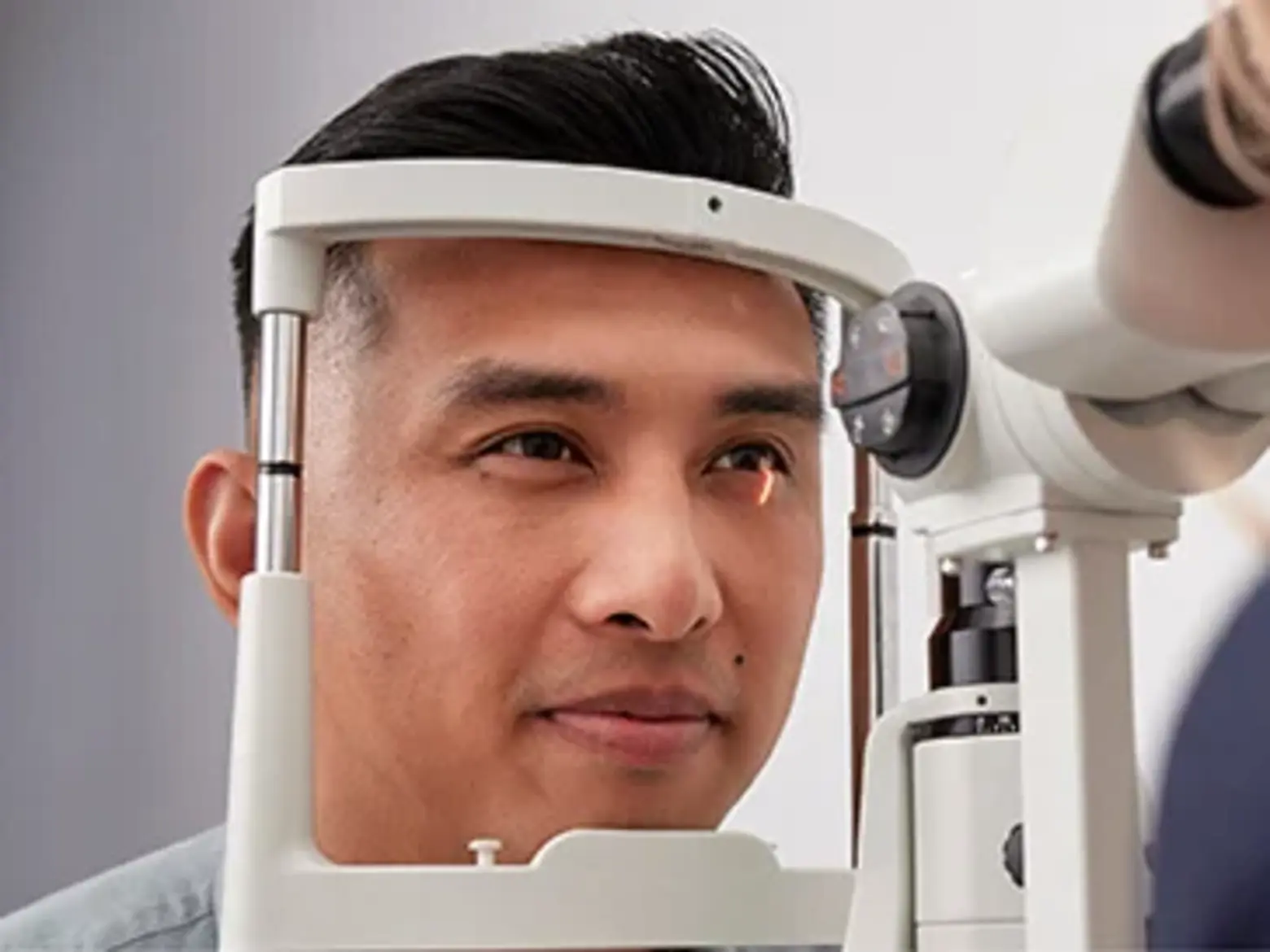
How is double vision treated?
The right treatment for diplopia depends on its underlying cause. If it’s caused by a mild strabismus (squint), you may only need corrective glasses. But if diabetes is making you have double vision, you’ll likely need to manage your blood sugar, make lifestyle changes, and possibly start insulin injections.
Below, we’ve outlined some common ways to manage the double vision itself. However, if it’s linked to another condition, you’ll also need treatment that targets that specific issue.
Prism lenses (including Fresnel lenses)
Prism lenses are layers that can be stuck onto your normal glasses or even built into the lens. If your diplopia is caused by problems with eye alignment, the prism bends light to shift the image of the object, correcting the double vision.
Blocking vision in one eye
Diplopia might be due to a weakness in one eye. Your optometrist might recommend blocking vision in your healthy eye, forcing the weaker eye to work harder and improving your vision over time.
Botox injections
Botulinum toxin (Botox) injections can help by relaxing the muscles in the stronger eye. This gives the weaker eye a chance to recover and realign.
Double vision surgery
Your optometrist might recommend surgery if muscle weakness or eye conditions like cataracts or keratoconus are causing double vision. It might also be used to treat a droopy eyelid.
Referral to specialists
If your GP or optometrist believes that another health issue ‑ such as a brain tumour, diabetes or hormonal disorder ‑ is causing your double vision, they’ll refer you to a relevant specialist for further investigation and treatment.
Book an eye testPreventing double vision (diplopia)
Double vision can be caused by a range of health conditions, many of which are outside your control, so it’s not always something you can prevent. That said, there are a few things you can do to lower your risk.
Make sure you have regular eye tests and wear eye protection when doing activities that could lead to injury. Use proper head protection when cycling or playing contact sports. A healthy lifestyle also plays a part, so try to eat well, stay active and avoid drinking too much alcohol.
Your double vision questions, answered
Elderly people can start seeing double for a few different reasons. It could be down to eye issues like glaucoma or cataracts, a side effect of medications they take, or other health conditions such as diabetes. In some cases, double vision can be a sign of something more serious, such as an aneurysm or stroke. Any change in vision should be taken seriously.
If an elderly person you know has double vision that has come on suddenly, their eyes are painful, or they've become dizzy and confused, call 111 immediately.
No, binocular vision dysfunction (BVD) and binocular diplopia are different but related conditions. Many people get binocular vision dysfunction in New Zealand. It's a general term that covers a range of conditions where people's eyes don't work together properly. Binocular diplopia is more specific ‑ it's when you get double vision when using both eyes. At Specsavers, we offer binocular vision tests and BVD eye tests in our New Zealand stores.
Double vision that comes and goes can be caused by many different things. In some cases, it’s due to problems that need medical attention but aren’t immediately serious ‑ such as dry eye syndrome, astigmatism, eye strain, or cataracts. However, it can also point to more serious conditions like neurological disorders, strokes, or brain tumours, which require urgent care. That’s why it’s so important to get any changes to your sight seen by a specialist as soon as possible.
If you have new constant double vision, you should not drive until you are advised otherwise. Double vision that comes and goes can be caused by many problems. Often, it's caused by issues that do need medical treatment, but aren't super urgent. That includes things like dry eye syndrome, astigmatism, eye strain or cataracts. However, it could also be a sign of more serious conditions, including neurological issues, strokes or brain tumours which need to be treated urgently. This is why it's very important not to ignore it.
Double vision in one eye (monocular diplopia) is usually caused by a problem with how one of your eyes is working. Often, it's an issue with the eye itself ‑ such as a problem with the lens or cornea. It could also be caused by problems with the muscles that align the eyes. Sometimes it's an issue with the nerves in the affected eye. At all our stores in New Zealand, our optometrists can do tests to find out what's causing the double vision.
Yes, there are some kinds of glasses that can help treat double vision. They are known as prism glasses or prism lenses, and they work by redirecting light onto your retina. They can be helpful for people whose eyes don't line up. The prism is placed on the lens over the affected eye.
No, you cannot drive in New Zealand if you have double vision and you should stop driving immediately. However, if your diplopia is treated and controlled, the NZ Transport Agency ‑ Waka Kotahi says you can apply for a licence if you have a certificate from a New Zealand registered optometrist.
Regular UV radiation could potentially lead to double vision. Over a few years, regular exposure may mean you develop cataracts, which can cause diplopia. You can reduce your risk of cataracts caused by UV radiation by wearing sunglasses outdoors during the day.
Did you know?
AA Members are entitled to a free eye test (valued at $60), once every two years. Remember to present your AA Membership card in‑store.
Written with care and checked for accuracy

Yavani Mudaly
World Health Organization. (2019) World report on vision. World Health Organization. Available at: https://www.who.int/publications‑detail‑redirect/world‑report‑on‑vision
Cleveland Clinic. (N.D.). Double Vision (Diplopia): What It Is, Causes & Treatment. Available at: https://my.clevelandclinic.org/health/diseases/22203‑diplopia‑double‑vision
Medical News Today. (n.d.). Double vision (Diplopia): Causes, treatments, and more. Available at: https://www.medicalnewstoday.com/articles/170634
WebMD (2024) Double Vision (Diplopia): Causes, Symptoms, Diagnosis, and Treatment. Available at: https://www.webmd.com/eye‑health/double‑vision‑diplopia‑causes‑symptoms‑diagnosis‑treatment
Cambridge University Press. (n.d.). Diplopia (Chapter 6). In Neurology. Available at: https://www.cambridge.org/core/books/neurology/diplopia/C6C01B8BAA5E0579B85A97C4884F1E8E
Cambridge University Press. (n.d.). Diplopia (Chapter 17). In Neurologic Differential Diagnosis Available at: https://www.cambridge.org/core/books/neurologic‑differential‑diagnosis/diplopia/B88C1F466F56536B64F5419868F6EE22
Medsafe. (n.d.). Visual Disturbances with COX‑2 Inhibitors. Available at: https://medsafe.govt.nz/profs/PUarticles/COX2eye.htm
Wellington Eye Centre. (n.d.). Common Eye Conditions in New Zealand. Available at: https://wefixeyes.co.nz/articles/common‑eye‑conditions‑in‑new‑zealand/
Specsavers New Zealand. (n.d.). Double vision (diplopia). Available at: https://www.specsavers.co.nz/eye‑health/eye‑conditions/double‑vision?srsltid=AfmBOopMQvjRY6zmzAa9qTgDcJ74‑NjO0u77MFCf2nAbzrXoEYSmrY_V
Health New Zealand. (n.d.). Eyes. Available at: https://info.health.nz/conditions‑treatments/eyes
New Zealand Association of Optometrists. (n.d.). Eye Health. Available at: https://nzao.nz/public/eye‑health/
Eye Institute. (2022) Double Vision. Available at: https://eyeinstitute.co.nz/double‑vision/
Comrie, M. (2012) Double Vision. Sage Journals. Available at: https://journals.sagepub.com/doi/abs/10.1177/1940161212442955
University of Auckland. (n.d.). Vision Research Available at: https://visionresearch.auckland.ac.nz/
Could it be something else?
A chalazion is a blocked oil gland in the eyelid that causes a firm, usually painless lump and can lead to eyelid swelling or blurred vision.
If your vision looks misty or washed out, especially in bright light or when driving at night, it could be cataracts.
When your cornea is shaped more like a rugby ball than a soccer ball, it can cause astigmatism, leading to blurred or distorted vision.
Short‑sightedness (myopia) affects distance vision, but usually doesn’t impact close‑up tasks.
Long‑sightedness can cause blurry near vision even if your distance vision is fine.
Glaucoma can develop gradually and cause vision loss if not caught early, often affecting side vision first.
Diabetes can affect the blood vessels at the back of your eye, leading to diabetic retinopathy and vision problems.
If your sight seems foggy or blurred, it could be caused by cataracts or another condition affecting your eye health.
Do your eyes feel tried, sore or gritty? Dry eye could be the culprit, making vision cloudy, or as if you have glazed eyes.
This is a common condition where the edges of the eyelids become red and swollen. It can be a cause of chalazion.
Seeing specks, spots or sudden flashes of light? These are common – but can also be a sign of a serious eye condition. It is worth checking out if they’re new or getting worse.
Find out more
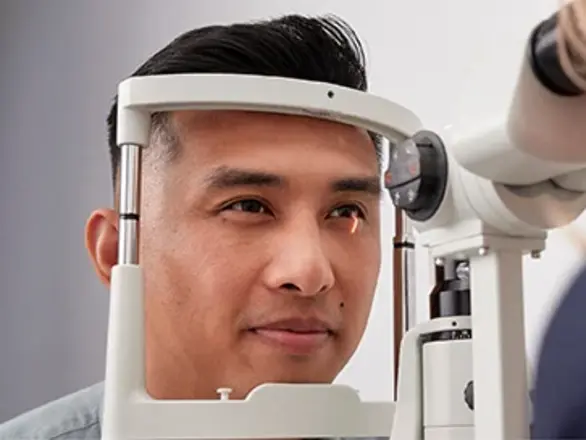
Why do I need an eye test?
Eye tests play a huge part in making sure your eyes stay healthy.
Check your vision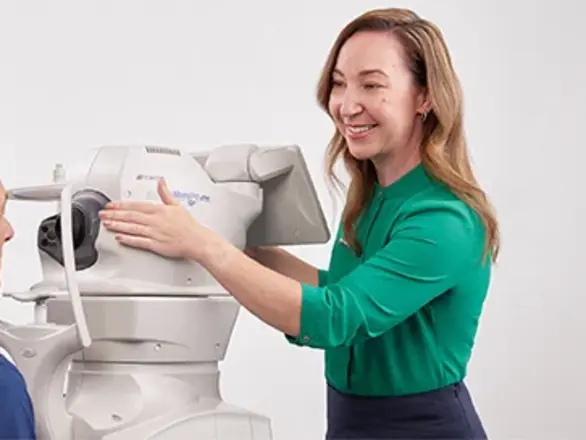
Your store visit explained
At Specsavers we are focused on caring for your eyes and giving you the best possible vision.
What to expect in‑store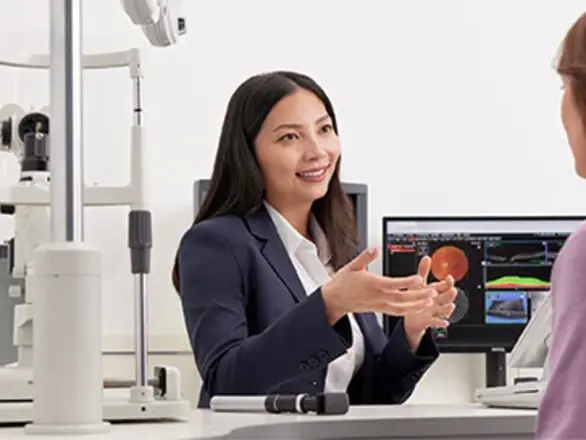
More on eye tests
An eye test is not just about getting glasses – it is a vital health check for your eyes.
All about eye tests
Free exam for AA Members applies to standard eye examinations only, normally valued at $60. Excludes contact lens examination and visual field checks. Limited to one per AA Member every two years. Available to current AA Members upon presentation of AA Membership card.